
Do we care about our trucks drivers’ health?
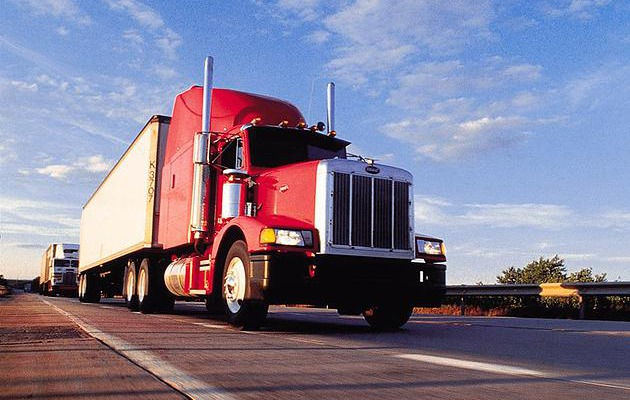
Data released by Safe Work Australia on 20 May 2014 detailed Work related fatalities involving trucks Australia 2003 – 2012 shows an alarming number of Australian Truck drivers are being killed at work each year.
Ann Sherry Safe Work Australia Chair states “around 80 workers are killed each year while working in or around a truck, and 39% of these people died in a single vehicle truck crash”.
These statistics are chilling, what are we doing?
It can safely be assumed that speed was a factor in some of these truck crashes but equally important are the following:-
Fatigue and speed (dying for a deadline)
Vehicle maintenance and road worthiness
Interaction of pedestrians and trucks.
Ensuring vehicles are parked and braked correctly
Falling from the top of loads and trailers
Product falling from loads when loading and unloading
While all parties in the supply chain have responsibility through Chain of Responsibility legislation; do Transport Companies, Consignors, and Consignees do enough to impact on this frightening statistic?
In an age where cost competiveness is critical and getting to the lowest common denominator can we reason this is acceptable when we are asking our workers to prejudice their health by taking short cuts? Many will say it is not my responsibility but are we pushing transport drivers and companies to accepting lower levels of payment for a contract job, delaying necessary maintenance, pushing drivers through the warehouse to improve the load or unload time, asking drivers to do rigging tasks which they are not trained for?
Warehouse managers need to take a good look at their warehouses and determine where the critical incident points may be. Are there adequate exclusion zones for a fork lift or crane to operate when loading or unloading? There needs to be a minimum 3 metre exclusion zone around a semi-trailer for loading and unloading as well as a driver safe zone for the driver to remain in to ensure the warehouse operators can unload and load knowing there is no risk of collision or integration with pedestrians. The LUEZ Loading Unloading Exclusion Guide is an excellent reference in this safety requirement,
Does the packaging of product allow for safe loading and unloading? Do you need to have drivers on the back of a truck? Why? If they are required for slinging or for packaging between products can this be completed on the ground prior to loading?
WorkCover have released a video on the risk of workers being on the backs of trucks following the fatality of a driver who fell two metres from a load to the ground.
This video has compelling advice from WorkCover as to what you must do to either prevent truck drivers being on top of trailers or the required infrastructure that can assist drivers if they must be on the back of a trailer. This video should be shared with all workers.
Does your driver have a mental health problem?

Another area of critical concern in managing Drivers Health is recognising the risk of drivers developing a mental health condition. Drivers who work long hours will cause a build-up of stress related conditions which can lead them to substance abuse. “Heads ûp” in an article presented on October 30, 2014 states “while one in five Australians are likely to be experiencing a mental health condition at any one time professional truck drivers have a 7% higher chance of developing depression than other Australians”. The report funded by Australian Rotary Health further provides that truck drivers who work excessive hours may cause stress which increases the risk of a mental health condition which can lead to substance abuse. Drivers experiencing symptoms of depression and anxiety are 27% more likely to abuse substances which will only worsen their condition, the report stated.
A Price Waterhouse Report in 2014 on mental health in the workplace revealed some interesting insights into the prevalence of mental health conditions in the transport postal and warehousing industries, and I quote from this report the following statistics
23% of workers have a mental health condition
6% of workers have a substance abuse condition
20.4% of workers have an anxiety condition
7.2% of workers have a mood condition i.e. depression.
The PwC report estimated Australian business were losing $10.9 billion annually for neglecting to address mental health issues in the workplace. However business that take pre=active action will on average experience a return of $2.30 for every $1 invested in initiatives that foster better mental health in the workplace. The Transport, Postal and warehousing industries the return is even higher for every $1 invested the return is $2.80. The cost to recruit a new driver can be as high as $10,000 while a $5000 investment in mental health safety will be far more advantageous to the whole business and the rest of society.
Consider developing a workplace mental health program
www.headsup.org.au has a simple tool that you can quickly and effectively tailor a mental health program for your work place. This program is an initiative of beyond blue and Mentally Healthy Workplace Alliance.
While we have a responsibility for driver’s health and safety and we busy ourselves with Drug and Alcohol testing it is important that we consider some of the other fundamental health issues which can affect our transport workers. It seems the current D&A programing is based on a punishment outcome “we catch and your gone” and “get yourself sorted before you come back to work”. Is this the right way to manage this? With an ever decreasing availability of drivers and drivers with experience may be we have to rethink our current Drug and Alcohol strategies from punishment to prevention.
The TruckSafe Industry Accreditation Program has a module entitled WorkPlace and Driver Health Standards which is a good place to start if you do not have a current health program for your drivers.


Comments